 Email:newalu01@hotmail.com
 Whatsapp:0086 133 3603 9679
 Wechat:Newalutech

Introduction to Painted Aluminum Coil Manufacturing
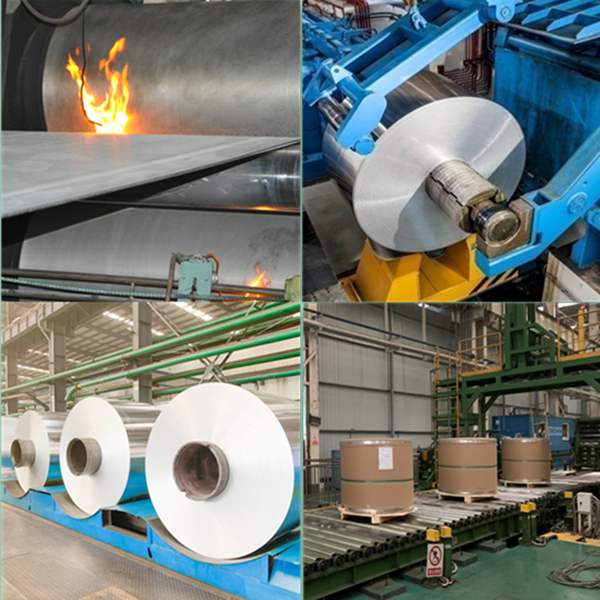
Painted aluminum coils are a pivotal component in various industries due to their combination of durability, aesthetic versatility, and resistance to corrosion. These coils undergo a detailed manufacturing process that begins with the selection of high-quality aluminum alloys, continues through advanced rolling techniques, and concludes with precise painting procedures. In this article, we will examine each stage of their production, highlighting the factors contributing to their widespread use.
Aluminum Alloys and Their Role in Coil Manufacturing
Selection of Aluminum Alloys
The production of painted aluminum coils starts with the selection of appropriate alloys. These alloys are created by adding elements like copper, magnesium, and zinc to pure aluminum, enhancing its properties. Notable series include the 1000 series, known for its purity; the 3000 series, praised for its rust-resistance due to manganese content; and the 5000 series, which is renowned for its strength and lightness due to magnesium inclusion.
Smelting and Refining of Raw Aluminum
From Bauxite to Ingots
The initial stage of coil production involves extracting aluminum from bauxite ore through smelting. This process results in the formation of aluminum ingots. Smelting requires high temperatures and involves both chemical and thermal steps to purify the aluminum. The refined aluminum is then cast into ingots, which serve as the foundation for subsequent processing stages.
Cold Rolling vs. Hot Rolling
Achieving Optimal Material Properties
Rolling processes determine the texture and properties of the aluminum coils. Cold rolling, which occurs at room temperature, provides a smooth finish and enhances the material's strength. It is essential for applications demanding precise dimensional tolerances. In contrast, hot rolling, conducted at elevated temperatures, allows for easier shaping and forming, suitable for developing aluminum sheets with less stringent tolerances.
Advanced Techniques in Roll Forming and Cold Working
Optimizing Thickness and Dimensions
Roll forming and cold working techniques enable the precise shaping of aluminum coils to the desired thickness and dimensions. Roll forming involves passing the aluminum through a series of rollers, refining its shape and thickness. Cold working conditions are adjusted to enhance the mechanical attributes of the aluminum, preparing it for further stages of manufacturing.
Work Hardening and Strain-Hardened Product Manufacturing
Enhancing Mechanical Strength
The process of work hardening involves deforming aluminum to increase its strength, while strain hardening further improves mechanical properties through controlled deformation. These techniques are crucial in fabricating high-strength aluminum products and involve complex interactions between stress, temperature, and metallurgical properties.
Application of Coatings in Aluminum Coil Manufacturing
Protective and Aesthetic Enhancements
After forming, aluminum coils undergo a coating process to enhance their surface properties. The color coating involves applying polyester or fluorocarbon layers, which are then baked to ensure durability and resistance to environmental conditions. These coatings offer aesthetic appeal and act as a barrier, protecting the material from corrosion and UV damage.
Characteristics of Painted and Color Coated Aluminum Coils
Quality and Longevity
Painted aluminum coils are celebrated for their strength, lightweight nature, and excellent conductivity. The application of color coatings adds to their resilience, offering a lifespan that can extend up to 30 years without significant degradation. This makes them suitable for demanding applications across various sectors, particularly where visual aesthetics are a priority.
Aluminum Coil Applications in Key Industries
From Automotive to Aerospace
Painted aluminum coils find use in numerous industries. In the automotive sector, they contribute to fuel efficiency by reducing vehicle weight. The aerospace industry values them for their ability to withstand extreme conditions while maintaining structural integrity. Furthermore, their application in consumer electronics enhances the durability and appeal of products.
Challenges and Innovations in Aluminum Coil Production
Meeting Market Demands
The production of painted aluminum coils faces challenges such as maintaining consistency in alloy compositions and adapting to new coating technologies. Innovations in production processes, such as automation and the use of advanced materials, are essential for addressing these challenges. Famous suppliers and factories continually strive to improve outputs while reducing costs and environmental impacts.
New Aluminum Provide Solutions
New Aluminum offers cutting-edge solutions in the field of aluminum coil manufacturing. By integrating advanced smelting techniques and state-of-the-art coating applications, New Aluminum stands out as a reputable supplier and partner for industries requiring superior aluminum products. With a focus on sustainability and innovation, they ensure that every coil produced meets the highest standards of quality and performance. Their commitment to reducing environmental impact while enhancing product longevity makes them a preferred choice in the market.
 Privacy settings